Our social:

Latest Post

Showing posts with label ecommerce. Show all posts

Wednesday, 8 July 2020

Mobile Shopping Audience


If you want to maximize exposure and boost sales,
you absolutely need to make sure your ecommerce
website is optimized for mobile devices.

With more  people logging on via a mobile device
rather than a laptop or computer, it's important
that merchants and other business owners cater
to this ever-growing audience.

Thankfully, you can do this in many different ways.

To start, you'll want to make sure that your 
website is properly viewed on mobile devices, such
as the page contracting and expanding depending on
the users device.

Here are a few other things to keep in mind:

1) Deliver an omnichannel shopping experience.
This basically means that you want to simplify the
shopping process so that mobile users are able to
quickly checkout with the products they're
interested in without taking them away from the
platform they're currently using.  

The easier you make the checkout process,
and the fewer required fields, the better.

2)  Be interactive. It's more important than ever
for online business owners to be responsive with
potential customers before and after the purchase.  

You should also consider opening up different channels
of communication that are specific to mobile users,
including live app based support or groups.

3)  Simplify navigation.  Always test out your
website on a variety of mobile devices to make sure
that everything looks the way that it should.  

Keep navigation simple and clear so that mobile users
are able to quickly return to the main page, or find
their way through different product types and categories.

4) Accept guest checkouts.  If you want to increase
conversion rates you should reconsider requiring
customers to create an account, or log into an account
in order to purchase your products.

These are just 4 of the many tips and strategies you'll
discover over the next few days. 

In our next post, we'll take a look at a few essentials for a 
successful ecommerce mobile site, so keep a look out for
the next post!

Sunday, 8 September 2019

How to get hot selling physical products for your eCommerce business


When it comes to selling physical goods online, I always like to start with a certain set of guidelines during the product selection process.
Because selling online is completely different than selling in a brick and mortar store, you want to choose products to sell that are conducive to online purchases and appeal to the typical online buyer.
Here are some of my “must have” product guidelines when choosing what to sell.
  • The product should not be fragile and easy to ship – Because we are going to be shipping products through the mail, you can avoid most headaches if you choose a product to sell that won’t break during shipment.
  • The product should not take up much physical space – Certain ecommerce business models require carrying inventory so it’s in your best interests to choose something small to sell and preferably an item that fits in a shoebox.
  • The product’s inherent value should be ambiguous – For example, I would never sell electronics because there is a set value for your goods that everyone is aware of. On the contrary, keepsakes and informational goods are much harder to place a price tag on.
  • The product should be timeless – Once again, I would never sell electronics because they lose value the longer they stay on the shelves
  • Avoid seasonal goods – In general, you don’t want to choose products that are only purchased during a specific time of year. For example, I would tend to avoid selling Halloween costumes.
  • Sell goods that sell from $15-200 – This is the sweet spot for pricing for online purchases.

The following product guidelines are “nice to have” when choosing what to sell so you might want to ask yourself the following questions…
  • Have you chosen a niche with related products you can expand into? – While we primarily sell handkerchiefs in our store, we’ve branded our shop as a linens store so we can easily expand to other markets.
  • Do your products lend itself to customers ordering more than one? – When we sell handkerchiefs to a bride, we rarely sell 1. Instead a typical bride will buy at least 4 and sometimes as many as 10.
  • Can your products be personalized? – The margins for personalized products are always going to be higher than regular products. So if you can offer customized goods, you can charge more for them.
  • Are your products consumable? – What’s nice about consumables is that your repeat customer rate will be high. As a result, your sales will tend to be more stable.
  • Does your niche have a fan base? – I like to choose products that have dedicated blogs or fan pages because you have an instant set of customers to market to.
  • Do your products lend itself to content creation? – When you own your own shop, search engine optimization will be an excellent source of traffic to your store. As a result, the more content you can put out, the more likely you will rank.
  • Do your products have lots of accessories? – Many online stores make most of their margins on the accessories they sell. So it’s in your best interests to offer goods that are conducive to upsells and cross sells.

Sunday, 1 September 2019

eCommerce Business in Nigeria


It’s no news that learning how to start ecommerce business in Nigeria is one of the smartest and fastest ways to amass wealth. Most especially in this 21st century.
In a country of over 180million residents. Which includes over 90million being internet users could be accredited to the success of e-commerce in Nigeria.


What is E-commerce

E-commerce is simply a sales transaction that takes place over the internet in other words electronic commerce.  

E-commerce is categorized into six major types with each having its features and attributes.


Types of E-commerce Business

  1. Business –to – business (B2B): this refers to the exchange of products and services between businesses rather than business and consumer.
  2. Business – to – consumer (B2C): selling of products and services from a business to the consumer. This is the most popular e-commerce business.
  3. Consumer – to – consumer (C2C): this is the type of e-commerce business in which consumers exchange products and services directly to each other online. This is usually done through a third party platform online.
  4. Consumer – to – Business (C2B): this kind refers to the process whereby individuals make their products and service to be sold to companies. Or an individual that’s rendering service for a company over the internet. E.g. logo artist or a freelancer.
  5. Business – to – Administration (B2A): business to administration is the business transaction between companies and governments. This could be private companies providing services for the public administration.
  6. Consumer – to – Administration (C2A): finally, consumer to administration is the transaction between individual and public administration. A good example is an electronic tax filing.


You don’t have to run operations like Amazon, Ebay, Jumia, and Konga to start a successful e-commerce business in Nigeria.


Click the link below to know what you need to do in other to have a successful e-commerce business in Nigeria.


Thursday, 18 October 2018

Facebook Ads

A Complete Step-by-Step Facebook Ads Guide

Want to start getting leads for your business NOW? Facebook ads is the quickest way to do that, and with this step-by-step Facebook ads tutorial on how to start using paid marketing on Facebook, we're going to get you there in time.

Following the steps covered in this Ebook and Video will get your business up and running on Facebook with some of the best practices you can use today!


With just Two
 Thousand five hundred Naira  
(N2500) 
you can

Get your copy Now by paying with your credit/debit card.

Click the Button below to Download after Payment


Thursday, 26 April 2018

E-Commerce SEO Guideline


On-page Optimization for Dropshipping StoresMost likely, you saw numerous guides on e-commerce SEO.

Most likely, they look like rocket science for you.Every new product pages on your dropshipping store should be SEO optimized according with these rules and guides – so stay tuned!
But it doesn’t mean that you should leave this area unattended. Believe us, you can easily optimize your dropshipping store with your bare hands!
In this article, we will try to explain difficult things in simple words so that you won’t struggle with SEO anymore. Don’t be shy to ask us questions in the comments section!

Why is e-commerce SEO important?

e-commerce SEO guideline
SEO, or search engine optimization, is vital for dropshipping business. The key to the success of your store are the buyers: the more visitors you attract to the site, the more purchases they will make, and the bigger profit you will get.
So the question is, how can Internet users locate your webstore?
And that’s exactly when SEO comes to play.
Obviously, you can spread the word about your dropshipping store through social networks. Facebook and Instagram work like miracle – you can learn about it from our own experience and from success stories of our clients.
But still, what do you do when you need to find something online? You look it up in Google! You look through several pages that are shown first, and you rarely even go to the second page, to say nothing of the third and further pages.
Therefore, as a dropshipping store owner, you need to make your website shown as highly on the search engine results page as possible. What can you do to make it happen?

E-commerce SEO on the preparatory stage

e-commerce SEO guideline
Ideally, your SEO efforts should start the exact moment you decided to start dropshipping business.
We’re talking about the niche choice now.
As you probably remember, we have already covered this aspect before. In short, you need to make sure that the niche itself will be good for SEO. It is one of the most important aspects of choosing a niche for dropshipping business because it lays at the foundation of everything you will do further. If the niche itself has a limited potential for SEO, you will have a really hard time trying to make your store popular. So research our E-commerce SEO guide carefully before you make up your mind on a certain niche!

E-commerce SEO on the development stage

e-commerce SEO development stage
Similarly, you need to start thinking about e-commerce SEO at the very first stages of designing and developing your dropshipping store.
The reason is, the better your website is structured and organized, the easier it is for search engines to scan it. If you put your category pages and product pages too far away from the main page, it will:
  • Disorient search engines – they won’t be able to reach and scan these well-hidden pages, so you won’t get as high rankings as you could have;
  • Make your store visitors frustrated – normally, it should take clients not more than 3 clicks to reach any product page from the main page.
It means that the first step in developing your future dropshipping store is thinking out its structure. Your website needs to be organized logically, clearly and quite simply. And to achieve that, you need to start with choosing the most relevant keywords.

E-commerce SEO: choosing keywords

Why would you need to start with keywords?
Well, because you will use them to create and name product categories.
Most likely, you already have one or two most relevant keywords at this point – you generated them while you evaluated SEO potential of your niche.
Obviously, 1-2 keywords are not enough. You will need much more of them to:
  • Make a logical structure for your dropshipping store;
  • Select products and product categories that are the most favorable for SEO;
  • Pick good names for every category.
So where can you get enough ideas for keywords?
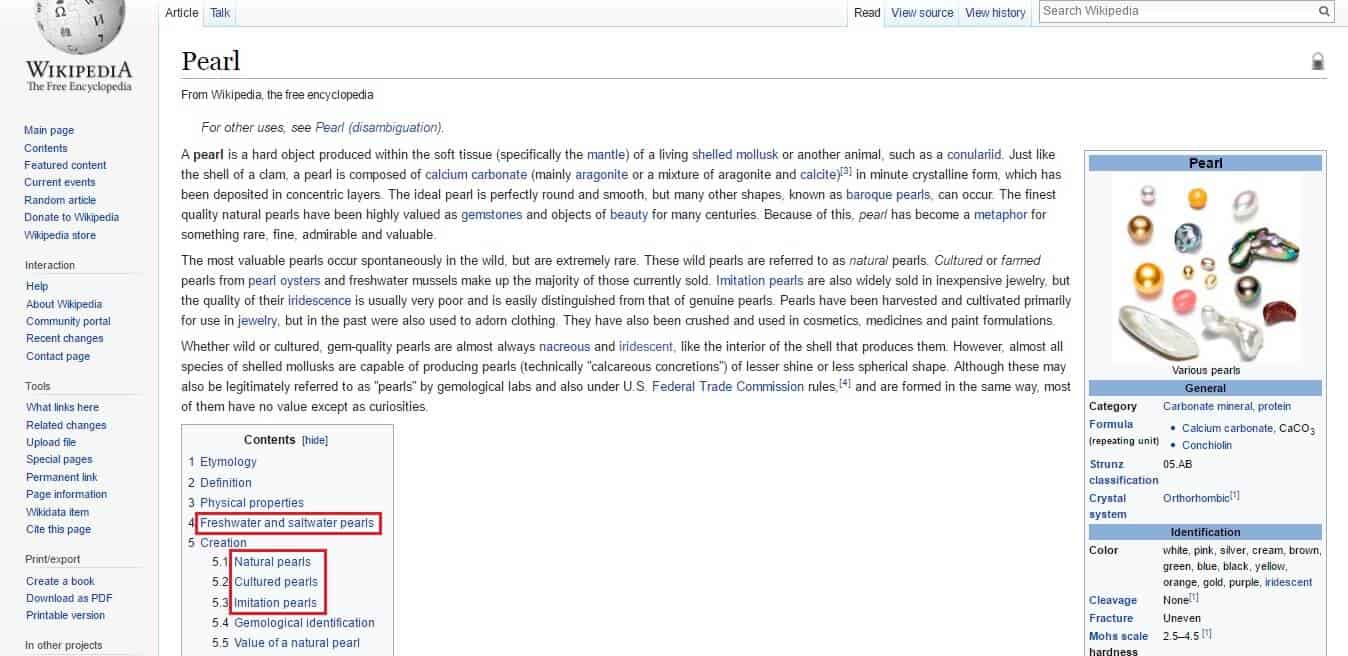
  • Go to Wikipedia. Quite surprisingly, it is possible to find something interesting there for some types of products. For example, let’s say you are going to sell pearls jewelry and decorations. What does Wikipedia say on that?
e-commerce SEO checking keywords in wikipedia
As you can see, you can pick at least 5 keywords from Contents section alone: freshwater pearls, saltwater pearls, natural pearls, cultured pearls, and imitation pearls. A great start!
Of course it doesn’t work with all the niches and products. Still, check it quickly at the beginning of your search to be 100% sure you didn’t miss anything.
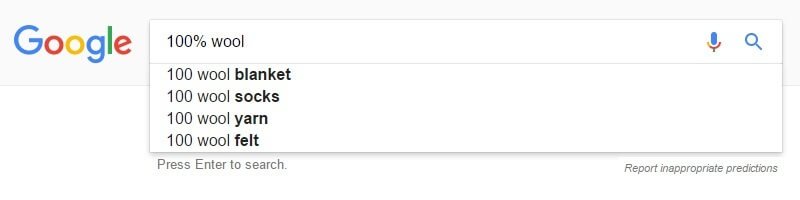
  • Use Google Autocomplete function. For example, you want to sell items made of wool – great idea! Let’s see what we can get from the search engine:
e-commerce SEO keywords in Google autocomplete
As you can see, Google can show you some really nice ideas – maybe you didn’t even think about them at first! If they are shown automatically, it means that people search them quite often, and that’s exactly what you need.
  • Use Related search field. Again, let’s take the same wool:
e-commerce SEO selecting keywords
It is clear from this example that people who search 100% wool are also looking specifically for wool yarn, wool fabrics etc. Therefore, this is how you can narrow down your keywords and make them more specific.
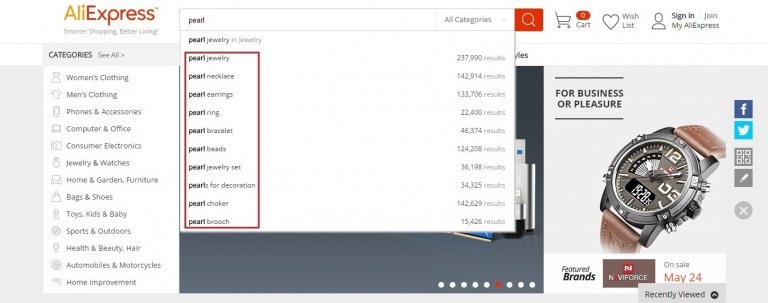
  • Use AliExpress autocomplete function. If you’re going to use AliExpress to select dropshipping suppliers for your store, it is logical to check what kinds of items are offered there. Plus, it will give you a range of ideas about keywords:
e-commerce SEO keywords on AliExpress
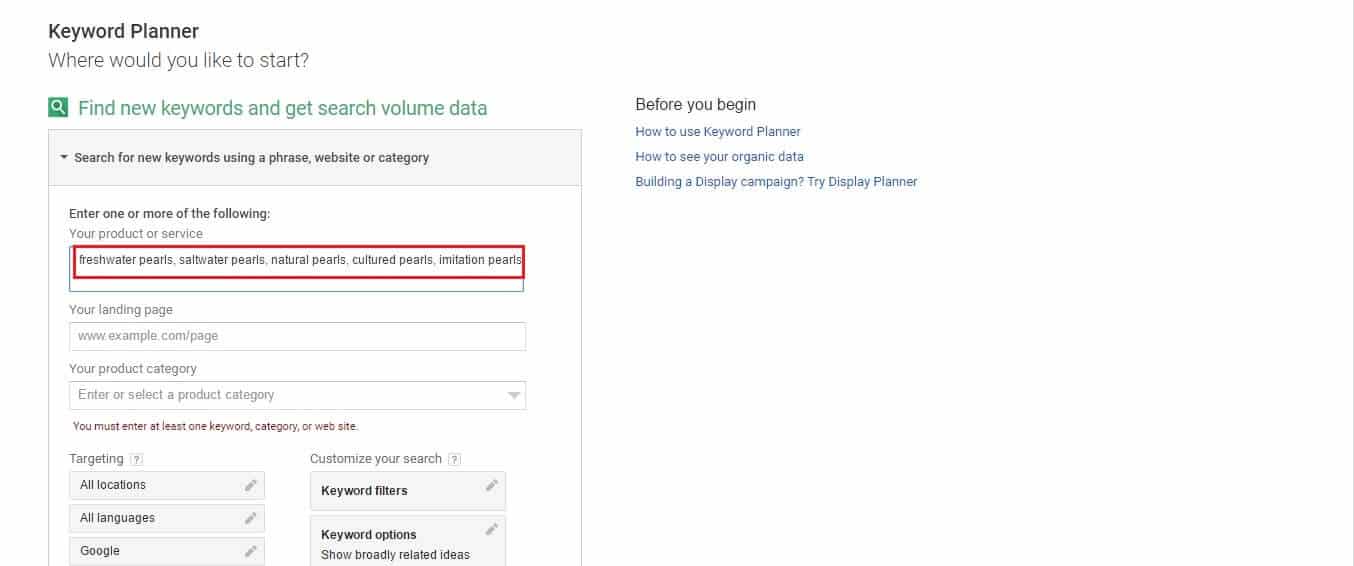
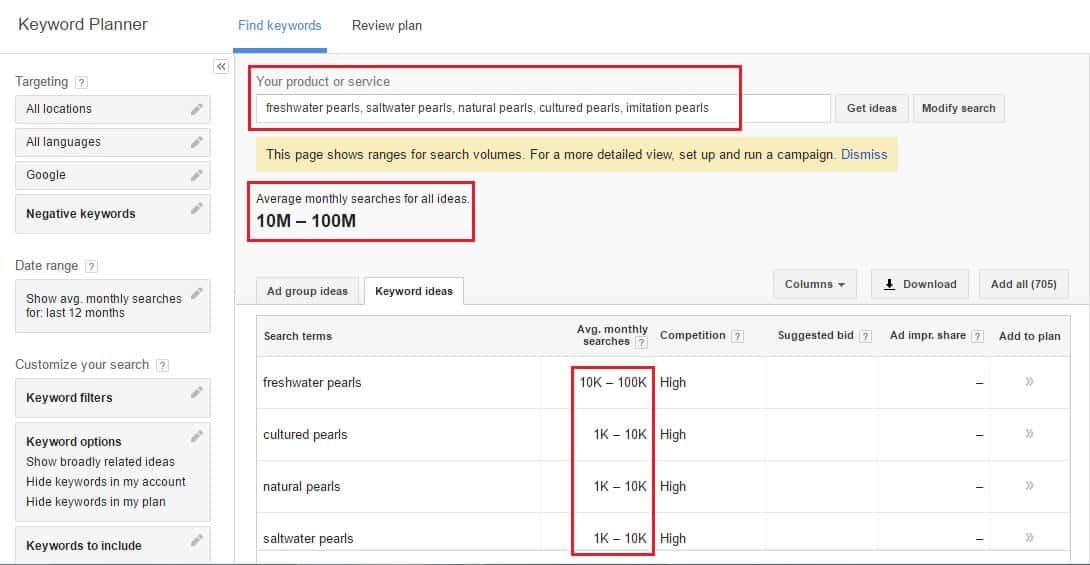
e-commerce SEO using Google keyword planner
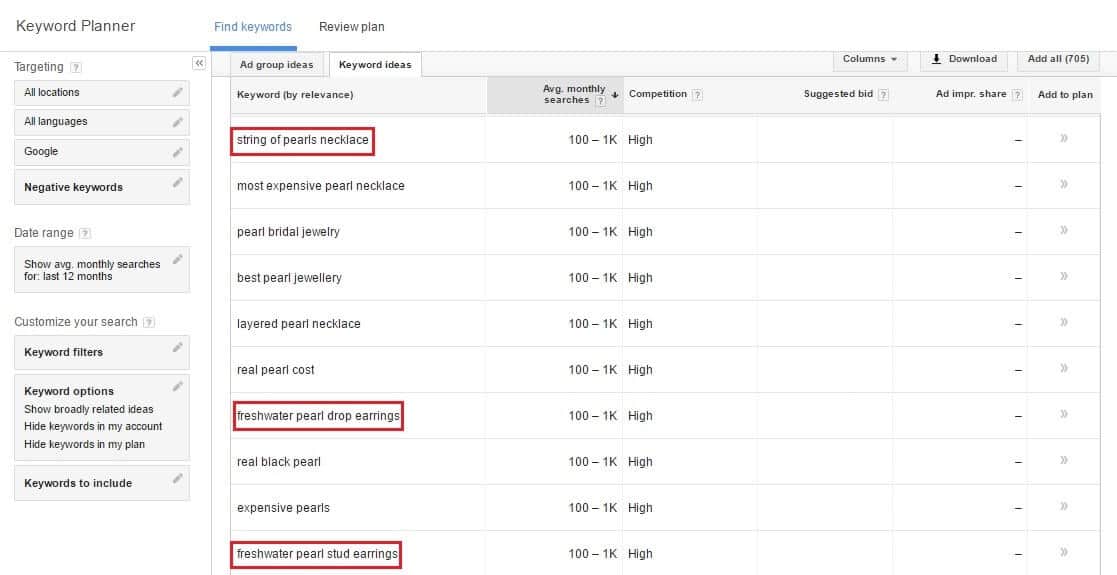
You will see how often people look for this or that keyword:
e-commerce SEO selecting keywords in Google keyword planner
Don’t limit yourself only with keywords that have the biggest amount of searches! Keywords with medium and low frequency can be a good addition because they are less competitive. Also, they are more specific: it means that they can bring you more targeted visitors who were looking EXACTLY for this words combination. Therefore, conversion rate will be higher.
google keyword planner for e-commerce seo

E-commerce SEO: site architecture

Okay, now you have several keywords that are relevant and interesting for your potential buyers. Great! Now it’s time to get to the site architecture.
(Please note that you need to research this part only if you are making your own dropshipping store yourself. In case you are going to purchase a ready-made store, you don’t even have to worry about it – everything will be professionally done by qualified specialists).
Generally speaking, when you deal with site architecture, you need to make it as plain and clear as possible. If your site structure is good enough, it will be easy for search engines to access and index the content, which means you will get higher rankings.
What is also important, an understandable site structure is valuable for your clients. And Google takes this into account when it ranks websites! Google analyzes behavior of people who visit your site. If your visitors don’t stay long in your online store, and if they don’t want to click any store links to learn more about your offers, Google doesn’t attribute a high rank to this site. And to make your potential customers more interested in staying on your site longer, you can:
  • Build your site architecture around the keywords you previously found. To do this, you need to understand what search queries can lead people to your site, and what exactly can people search when they already are visiting your store.
  • Make a logical hierarchy. Using the most relevant keywords, you need to create an architecture that helps both store visitors and search engines easily find their way to products pages from the home page. Create 4-10 unique product categories, and divide each of them into several subcategories. Don’t try to make too many!
  • Think about internal linking. Every page in your webstore should have at least one link to another page within the site, and at least one link from another in-site destination. It is important because search engines use such links to understand which pages on the site are valuable, and how can one get there. The structure you have created should be suitable for internal linking.
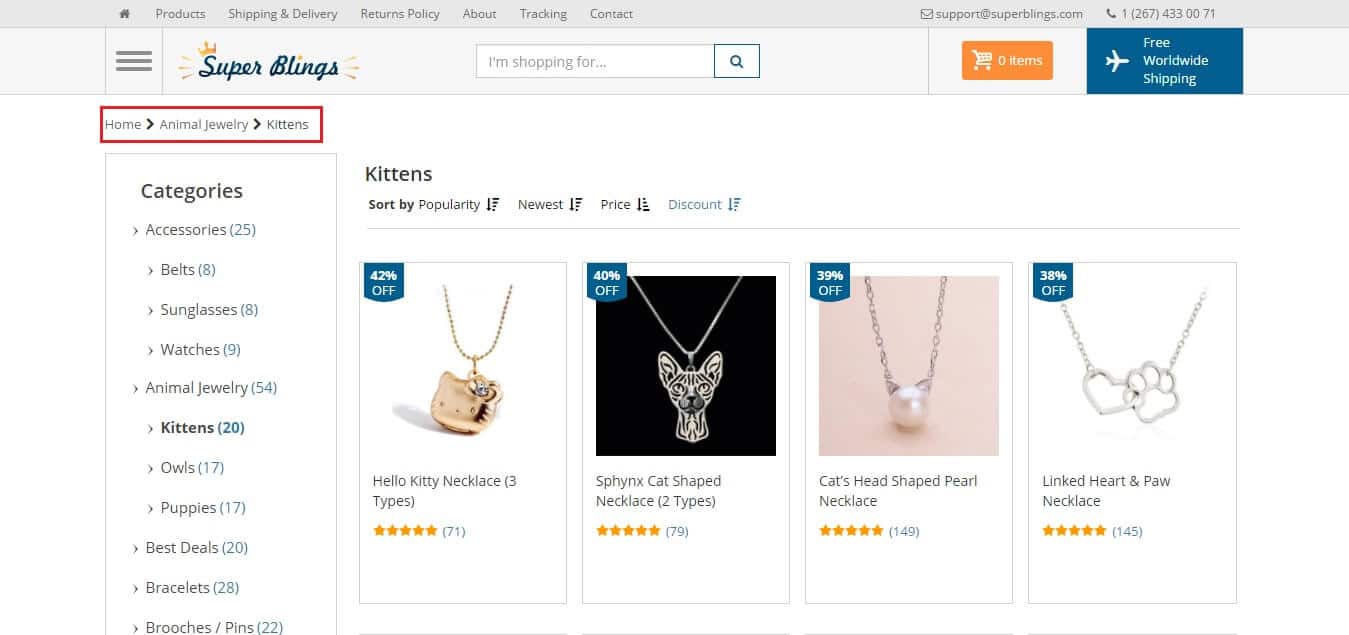
To improve the navigation within you webstore and enhance your customers’ experience (and also to get higher rankings), you can also implement some additional elements. For example, let’s look at so-called breadcrumbs:
breadcrumbs for e-commerce seo
Breadcrumbs are a supporting navigation element that helps both your store visitors and search engines understand where they are now, and how they can find their way back. Breadcrumbs are commonly used on websites with a large amount of products organized in a hierarchical way – that’s just what you need! With breadcrumbs, it is easier to make visitors stay on your website longer, and this can greatly improve your rankings.
Also, think about a sitemap: it is essential because it helps Google research the webstore and index each page. A sitemap makes it easier for Google to go through the website structure and access content, and therefore, you can get higher rankings.
Speaking of site architecture, we should mention that your store should be mobile-friendly. Take your time to make sure the design of your webstore is responsible enough.
Of course these and many other related issues mostly refer to the technical side of optimizing your webstore. Therefore, if you are not sure you can perform these tasks yourself, it would be wiser to buy a ready-made custom store meeting all your business needs.

Seo for ecommerce product pages: editing stage

Okay, here comes the part that you will DEFINITELY be doing yourself. Every new product page on your dropshipping store should be SEO-friendly, so stay tuned and follow these rules and guides to optimize all of them!
We have already discussed the changes you can make to a product page to make your customers more interested, and to increase conversion rate. Still, there are much more things you can do!
For dropshipping stores, on-page SEO aspect is especially relevant. When you add seller’s items to your store, you automatically import all the product descriptions, photos, reviews etc., which means your store content is not unique. And if you fix this, you can boost your store performance without any additional expenses.

So what do you need to do for ecommerce product page optimization?

  • Edit product names.
The names of AliExpress items are long, confusing, and sometimes they don’t even make much sense. As soon as you’ve imported an item, cut its name down to make it nice and clean. Just leave the most important 3-4 words that contain the category keyword and help your visitor understand what it is.
editing products for e-commerce seo
It is best to leave the name of a category, and 1-2 unique features of a product:
how to edit products for ecommerce seo
Now this name is short, understandable, and more or less unique. It is based upon the ‘enamel pin’ keyword. The new title contains the name of a product category (‘pin’), the material of the product (‘enamel’) and its shape (‘aeropress’). That’s everything your customer needs to know!
  • Edit product URL.
In the previous example, we have changed the product name to a more SEO-friendly one, but the URL is still ugly:
e-commerce seo - editing product URL
If you leave it just like this, it will be inconvenient for customers, and unwelcomed by search engines. No one likes URLs that looks spammy, with numbers and letters that don’t make sense, or with lots of random words. Let’s make it short and clear:
e-commerce seo - changing product URL
Now it contains the necessary keyword, and looks short, clear, and relevant. Search engines will totally love it!
  • Write the best product descriptions and remember about SEO.
This is absolutely essential! Write something unique and interesting about each product (you’re passionate about your niche and know everything about your niche, right?) You need to concentrate on the product’s features and benefits to make it appealing for your customer, and you definitely shouldn’t copy the description from a different website. The text should be about 100-150 words long. While creating your best product descriptions, don’t forget about SEO aspects: mention the keyword several times (but do not be too spammy).
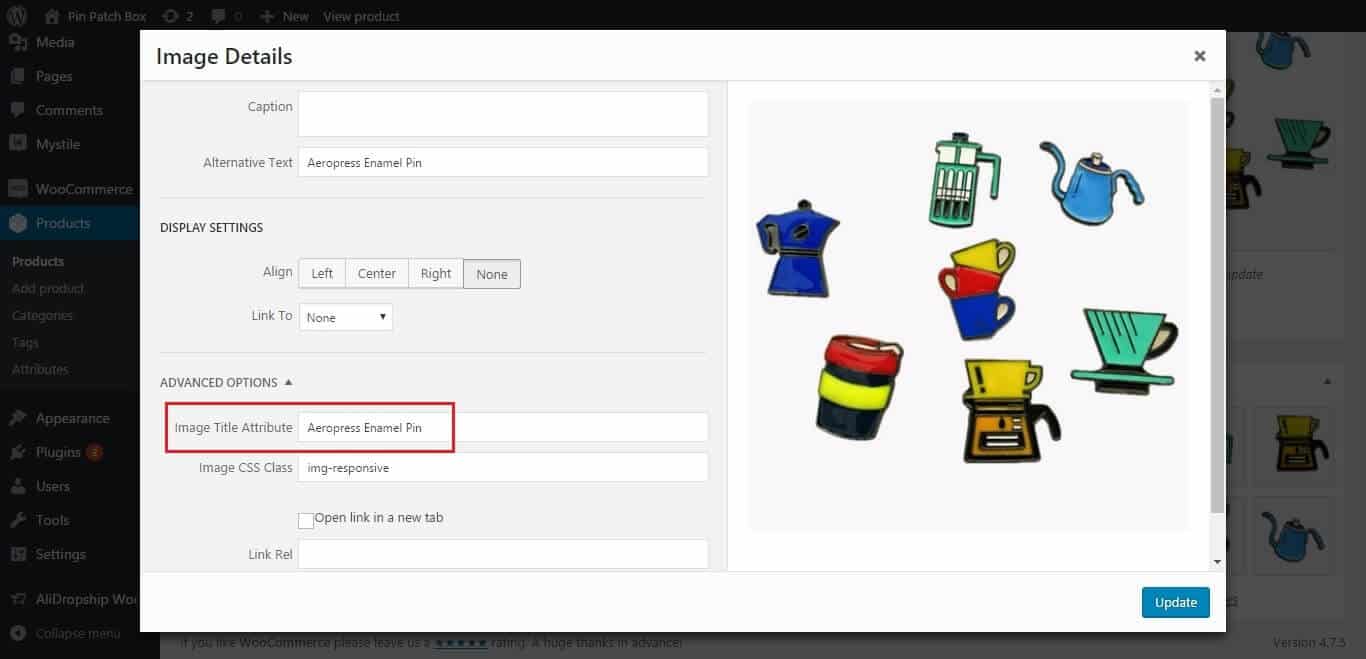
  • Write SEO ALT-tags for your images.
If you include images in your product description, make sure to write ALT-tags for them – and don’t forget to include the keyword!
image optimization for e-commerce seo
This is really easy to do, and this simple action helps your webstore become more accessible. This information is valuable to search engines, and Google pays great attention to ALT texts.
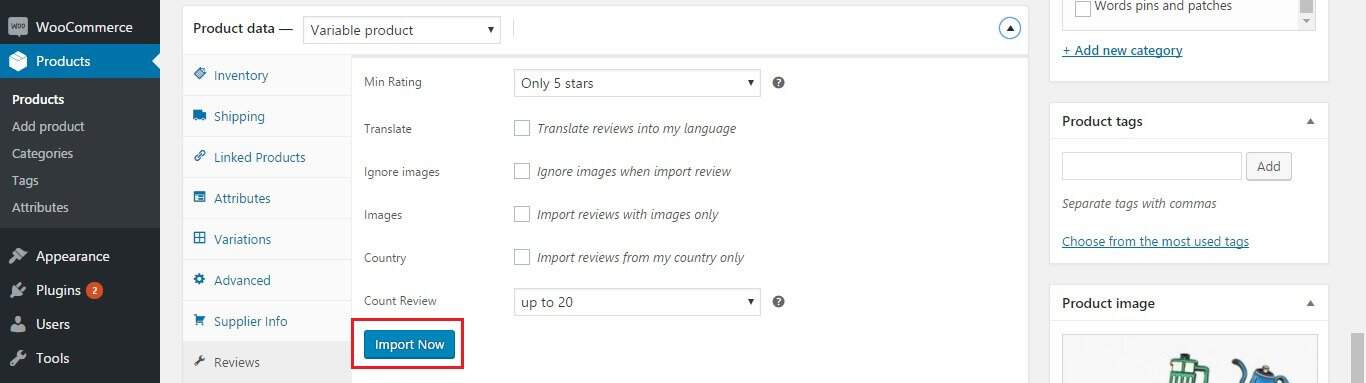
  • Import product reviews.
importing product reviews for e-commerce seo
Well, this is obvious. If you take real reviews that real people left on the supplier’s site, your store visitors will be able to learn much more about the product. Also, these reviews provide your store with a unique content that is regularly updated, and search engines really like it.
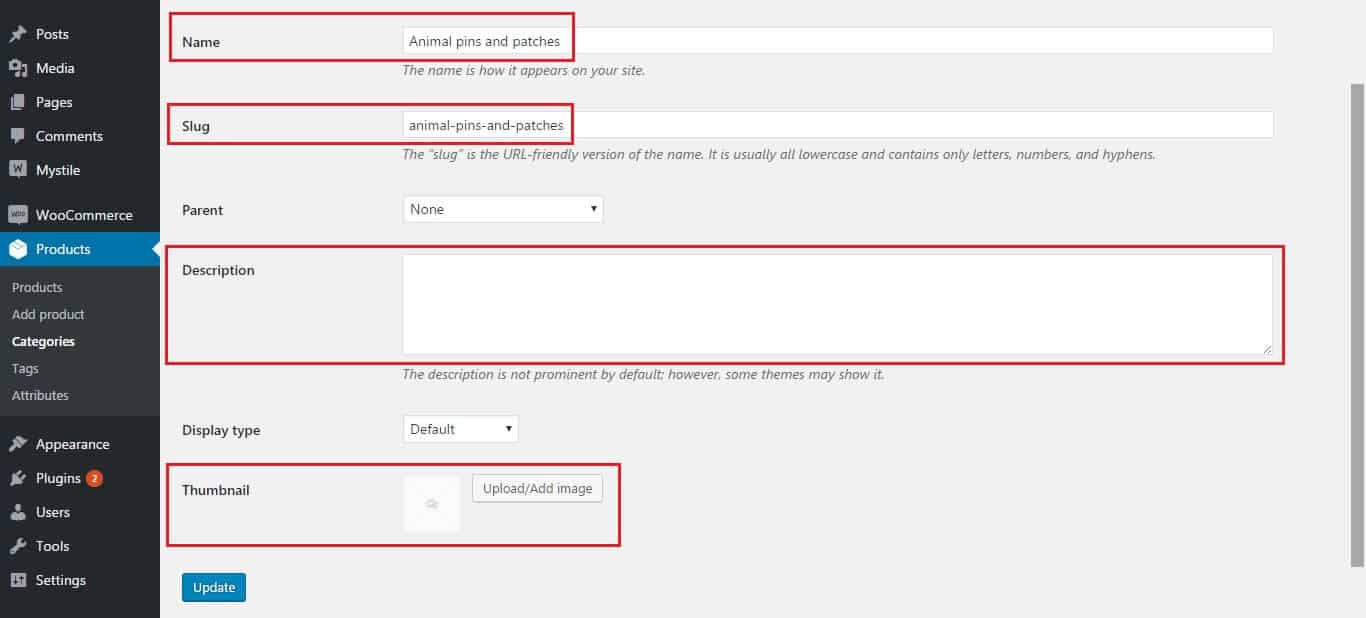
  • Optimize categories and subcategories.
Don’t forget about them! They are as important as single product pages.
product optimization for e-commerce seo
Remember that SEO texts for these pages should be longer, about 300 words. You will also need to include the keyword into the text, but don’t put it too often: two or three are enough.
As you can see, On-Page e-commerce SEO is nothing like rocket science. You can totally do it!


How You Can Beat Amazon with Your Ecommerce Store


One of the most common questions people ask us is ‘How can my dropshipping store compete with giants?’
We understand their concerns. Indeed, if you own just a tiny store with 50-100 products, how can you win over market titans like Amazon? With hundreds thousands items, global recognition, positive reputation and premium marketing, they seem unbeatable.
But actually, there are at least THREE reasons why your store can be better than Amazon! And if you use these factors right, you can forget about competitors and enjoy a nice solid income from your dropshipping venture.
Amazon vs your dropshipping store: focus on price

Why do people usually order items from Amazon?
Mostly because they think it’s cheaper.
But in the reality, Amazon items are not as affordable as it’s commonly thought. Let’s take a look at the following example.
You probably remember our World of Harry store – we talked about it when we explained how to create an AdWords campaign with a huge ROI, and also we used it as an example of using a successful strategy for Facebook promotion.
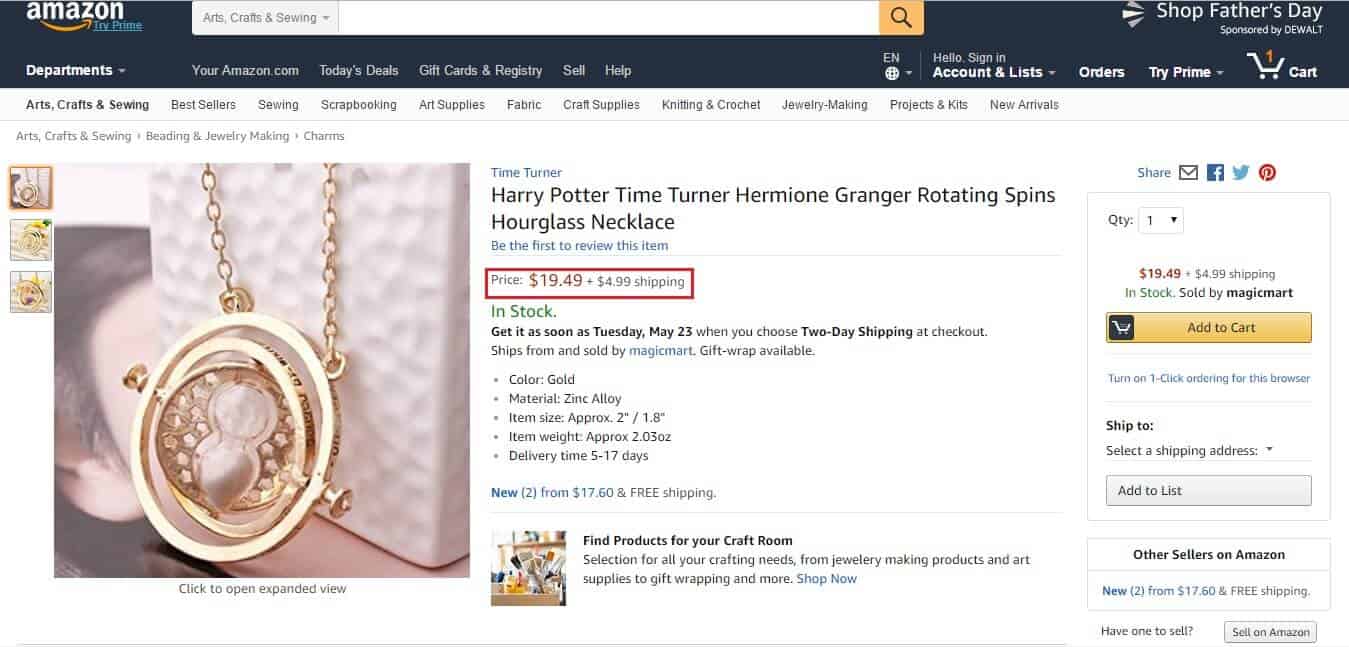
We started working with this store quite a long time ago, and we know this niche fairly well. That’s why we were really surprised when we saw that one of the niche items is listed on Amazon for a really high price:
Beat Amazon with Your Dropshipping Store
Please notice: the Amazon item is sold for $19.49 PLUS you must also pay $4.99 for delivery. Therefore, the total cost of this purchase would be $24.48.
Er…maybe this necklace really turns back time, we don’t know. No, seriously. We have no other logical explanation why the seller would set such a price for it.
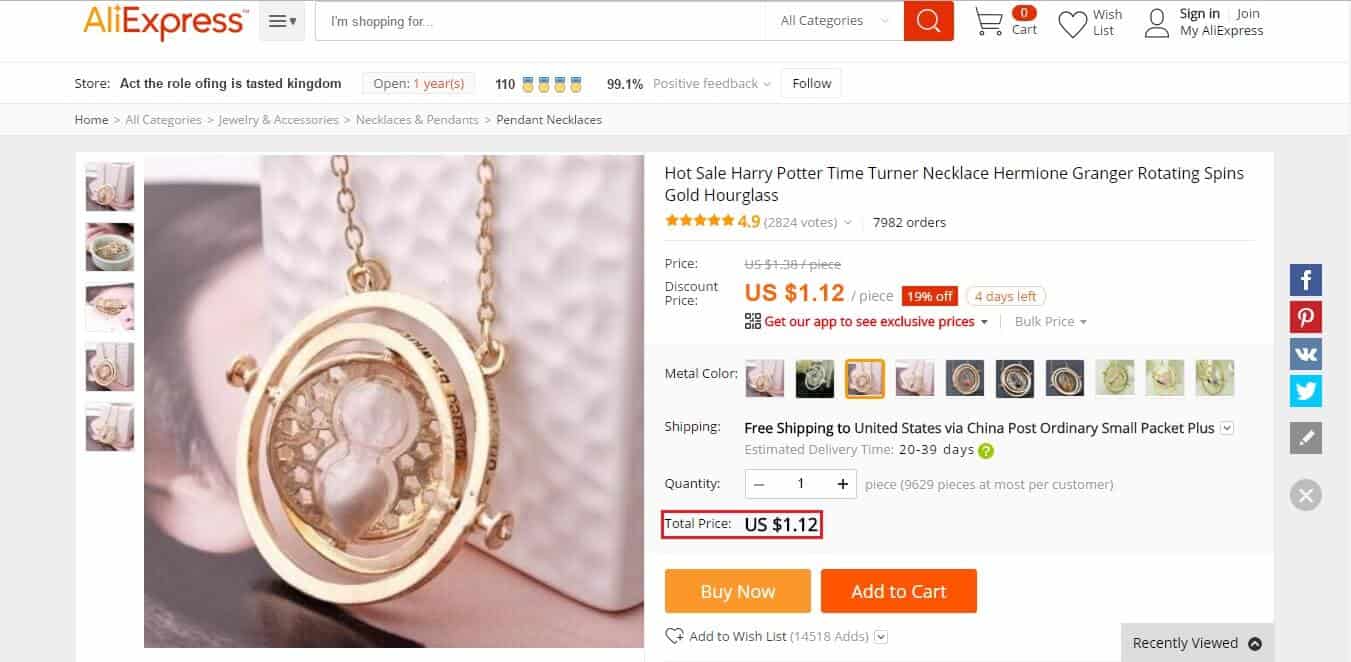
Compare this offer to the identical one on AliExpress:
Beat Amazon with Your Dropshipping Store
The same niche category, the same product, even the same picture. But the price is $1.12, and free shipping option is available. The item is MORE THAN 20 TIMES cheaper than the identical one on Amazon!
What does it mean?
It means that we as dropshippers have a great opportunity to secure ourselves good profits if we partner with AliExpress sellers. We take their products, add them to our stores, set a nice markup, and the overall price is 2 TIMES LOWERthan the one from Amazon. Take a look:
Beat Amazon with Your Dropshipping Store
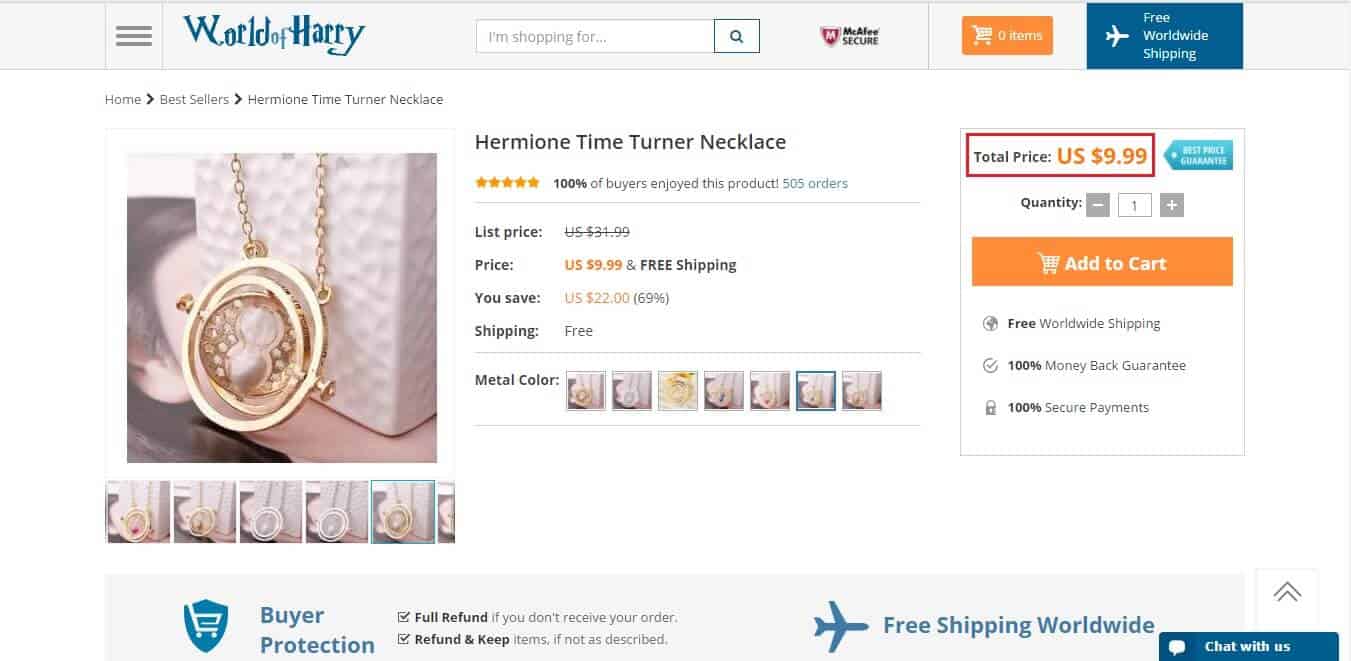
That’s a screenshot from our World of Harry store showing the very same item – as you can see, even the product photo is totally identical. The price we set is $9.99, and free shipping is available.
In other words, we have increased the initial product price more than 8 times (800%), but it is not a problem for our customers! Paying half the Amazon price, they get totally the same product, plus enjoy the free shipping. And we, in turn, enjoy our profit. Everyone is happy!
You might say: okay, that’s a really specific niche, and not a common product. Plus, it’s a kind of fan merchandise, so it’s clear why Amazon has higher prices.
Nope.
That’s not the case.
Amazon items are just more expensive, and it is true for every niche on this marketplace.
Let’s take another example – a piece of jewelry. How about some common generic things that are not exclusive – pendants, maybe?
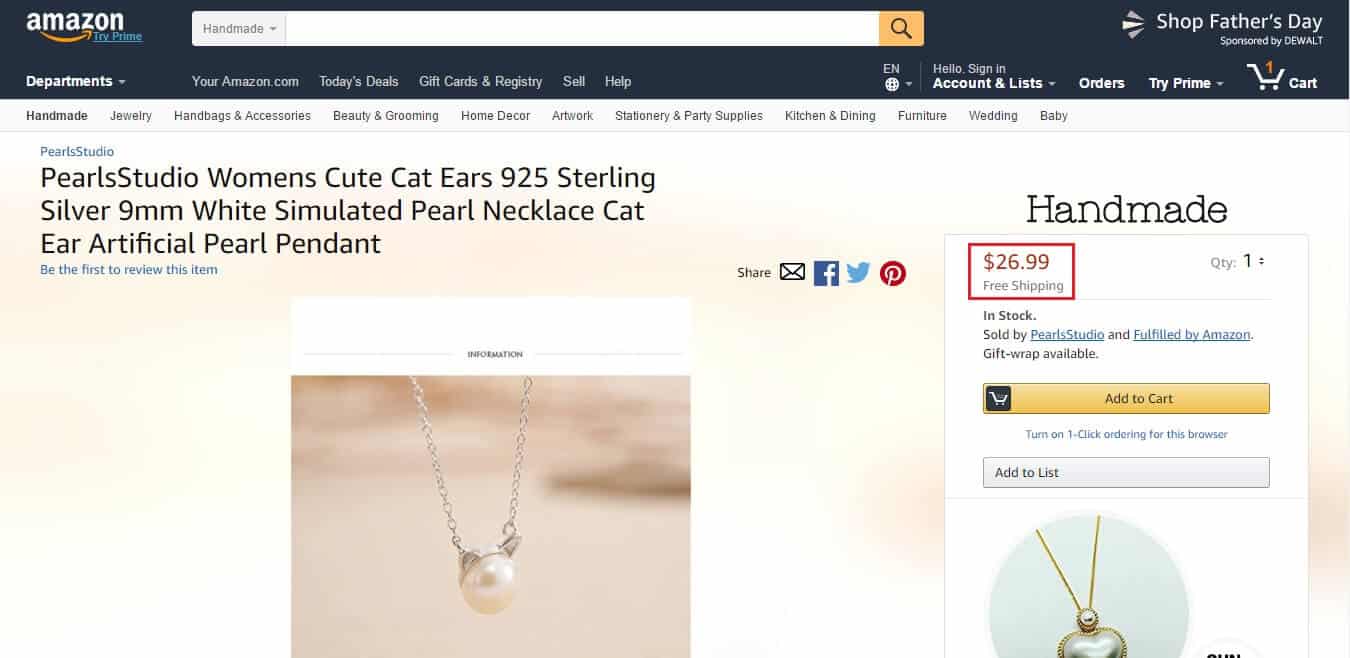
This is a cat-shaped pearl pendant that costs $26.99 on Amazon.
Beat Amazon with Your Dropshipping Store
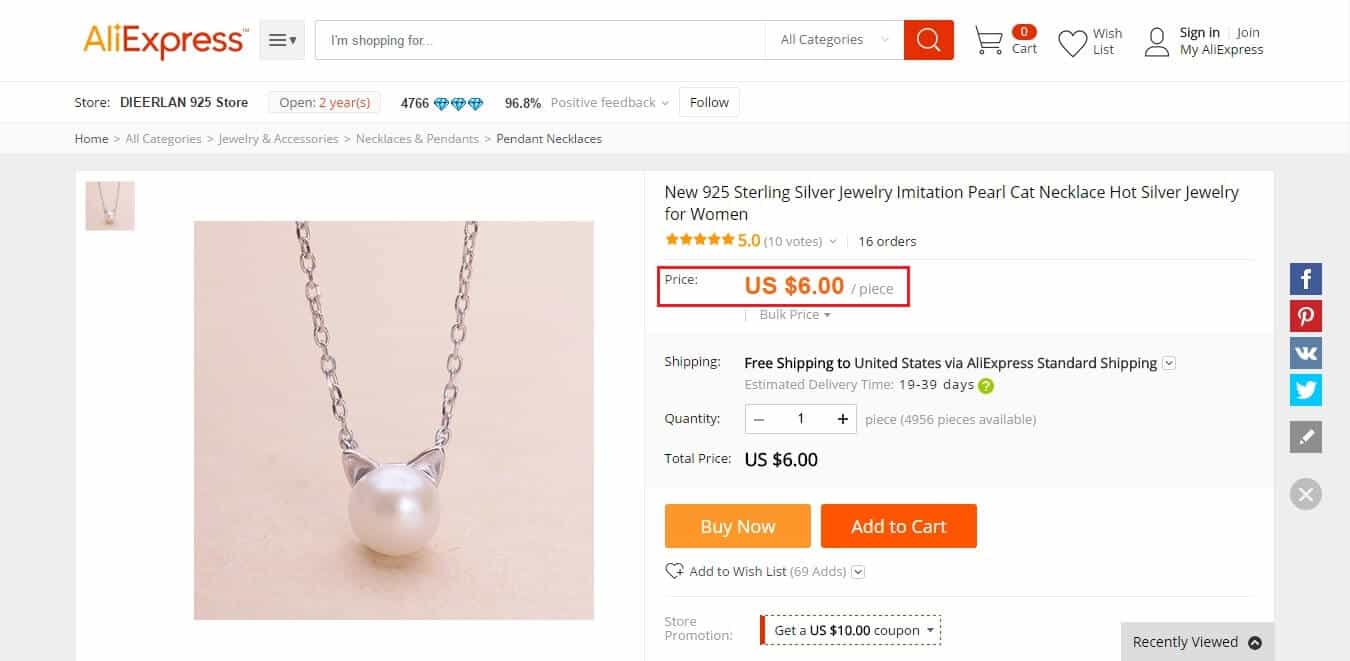
And this is an identical cat-shaped pearl pendant on offer for $6.00 on AliExpress.
Beat Amazon with Your Dropshipping Store
Conclusion?
Buyers will choose YOUR store over Amazon if you set your prices correctly. Your prices are your competitive advantage, so keep that in mind while setting your pricing strategy.
If you reasonably increase the original AliExpress price, you will get the item price that:
  • Is lower than the price for identical item on Amazon;
  • Is fine and suitable for your customers;
  • Is enough to provide you a nice profit.

Amazon vs your drop shipping store: specialize

Beat Amazon with Your Dropshipping Store
We have already discussed why niche stores are more appealing to customers than huge marketplaces. But we would like to talk about this aspect again because it is really important for a successful growth of your dropshipping business.
While browsing huge online marketplaces, people get confused quite often. It takes them a really long time to find the item they are looking for, and to check if every particular seller is trustworthy. You certainly know how easy it is to get distracted, forget why you are here, and finally leave the site without buying anything.
This can’t happen in a dropshipping store that is focused on a specific narrow niche. For example, when an Internet user visits store that is solely dedicated to socks, this potential customer won’t get distracted with other stuff like phone cases or shower curtains. Therefore, the chances for a completed purchase are much higher!
Also, if a person visits a store dedicated to socks, they expect to find here some specific and rare kinds of socks – not just something generic that you can buy anywhere else. Naturally, this is why you need to pay careful attention to the choice of products you add to your dropshipping store.
Plus, visiting a dedicated niche store, customers expect to deal with professionals who specialize on this narrow subject. They expect to get answers for any questions about the used materials, the place of origin, the technical specifications, the peculiarities of use, etc. for EVERY product on offer.
It means that your ultimate goal is to create a fitting atmosphere in your store. When an Internet user visits your site, they should immediately get impressed by your professionalism and knowledge in this sphere. Even our own clients recommend working with a niche you are passionate about.
Analysis of successful dropshipping business shows that your own interest towards the store niche is a key to commercial success. It helps you persuade your potential buyers that you REALLY know what you are doing. Therefore, your customers understand that they can expect a top quality of items you offer, and also count on prompt and professional support.

Amazon vs your dropshipping store: go global

Beat Amazon with Your Dropshipping Store
Nowadays, you can place an international order in Amazon only if you live in a supported country – there is a list of countries (mostly European ones) where Amazon mostly operates. If you too are focused on the same countries, you still can compete with Amazon because of a lower products price and higher quality of customer service.
What about the rest of the world?
Well, technically, Amazon delivers items to other countries as well. But for these regions, it offers higher shipping fees and longer terms of delivery. What’s more, there are 5 countries on the globe where Amazon doesn’t ship items at all. Also, there are about 30 more countries where Amazon shipping might be limited on certain conditions. And obviously, delivery terms differ from seller to seller. It means that customers must carefully check every Amazon seller to figure out if they can deliver these items to the seller’s country. Surely enough, it creates a huge inconvenience for buyers.
With dropshipping stores, however, this is not the case at all. Dropshipping business itself means that you can deliver any item to any point on the globe, and make people happy.
All you need to do is choose suitable items on AliExpress and add them on your website. AliExpress delivers products all over the globe, so you only need to make sure that the seller offers free delivery option or ePacket delivery option – both of them are more interesting to buyers than standard delivery.
As you can see, it is not correct to think that Amazon is a scary competitor that can’t be beaten. Your store, no matter how young and tiny, has huge advantages! Learn them carefully, use them, and reap rewards from your ever-growing dropshipping business.